It’s so wonderful to be back to the world of teaching. It’s as if education itself was hijacked for two years. Nothing felt secure or wholesome. So much was just making do to get us past the next wave of outbreak. But in that wake of intense uncertainty this year already seems particularly sweet.
I see the silver linings left behind from those dismal pandemic clouds. There’s the silver lining of nothing seeming too hard – because last year it felt that way all the time. There’s also the silver lining of knowing what truly matters – for a while it was mirky, whether it was washing down desks or giving a much needed hug. Anyway, I hope you get my point. Covid did clarify a lot of things, namely the importance of connection. Live or virtual, it was truly what held us all together.
This year feels special. We have bonded as a community and even in a way as a world. We are all survivors of something very hard. But that’s nothing new. Life itself is hard. Once you realize how important the people around you are, life becomes less hard.
So the biggest silver lining is the gift of gratitude. This year my heart is filled with it. In that expansiveness, I feel I have so much more room. I have an abundance of teaching energy left in me; it’s untapped, and I can’t wait to let it out.
To parents: thank you so much for the gift of your precious children. They make me better in every possible way.
Of all the transitions we face, the shift from summer to fall is the most bittersweet. It tugs at your heart. Summer is sublime, especially in Maine. Soaking in cool water, digging in earth, and gazing at the sky, summer brings us closer to the basics. Aside from the occasional traffic jam, summers in Maine are worth the work it takes to get there. Sadly, summers change into fall, and we just have to accept the transition, let go with grace, and be grateful for the bounty.
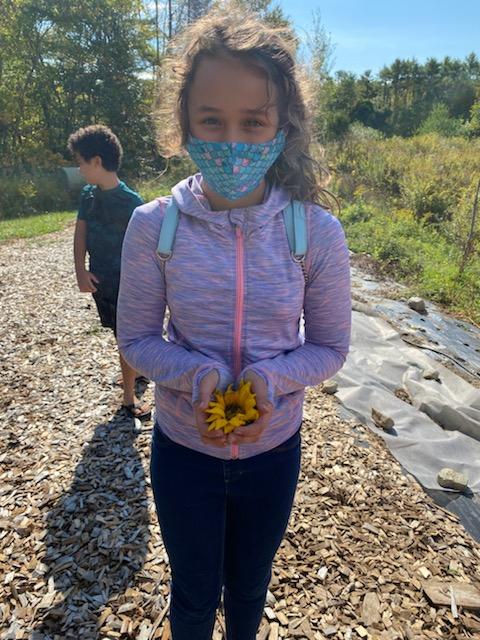
Transitions are worth savoring. Too often in the rush to buy back to school items, close up the camp, and put the garden to bed, the slower moments are missed. It’s worth looking back to admire the summer’s growth. Along with those amazing sunflowers, now ten feet tall, the kids are taller too. Our bodies are tanned and better nourished with fresh food. Arms that lugged the soil and pulled the weeds, are now firmer. Our phones are loaded with pictures and our hearts are full of fresh stories.
It’s time to celebrate the gifts of the season and resonate in the great connections with friends and family. It’s time to savor the waning rays of sunlight. Enjoy the crisp mornings and spontaneous heat waves. It’s time to layer up with easy to peel off clothing.
The cozy days will be here soon, but for now we can stand on the bridge between seasons, savoring the subtle changes. Daylight diminishes slowly, and so shall we slowly diminish our attachment to summer bliss.
After a long goodbye, we can begin to expel our stored energy and embrace the promise of the coming season.
This was the second week of full in-person instruction. Now that the students have adjusted, they appear to be settled in their environment and soothed by their new access to learning. We’ve been diving deeper into academics. These young humans are sponges and thirsty to learn meaningful content. The pump is primed to see them as writers.
This morning I am thinking about the writing process. If presented in a certain way, it can either open doors or slam them shut. If my years of teaching writing have taught me anything, it’s that writing is a behavior. It is a production that is constrained by a sense of worthiness. Never is a learner more vulnerable than when they put their thoughts to words for all to critique. I am mindful of this initiation process and I always try to treat it with kid gloves.
The process of creating a story begins with thoughts. These thoughts are easily accessed in pictures. The pictures create an order and offer more thoughts about the significance of the pictures. Putting words to match the pictures is a sensible process and far less intimidating if a writer feels unable to describe (or remember enough to describe) their visualization.
The need to approach formal writing with access for all learners, has lead me to use a variety of pre-writing experiences. I fully expect that few children will be comfortable enough to sit down and take to a task as ominous as “describe a time spent with friends and what you learned” and expect there to be a full display of skills that fit neatly into a spectrum which accurately advises a course of instruction. That type of screening is an okay tool, but if used too often it can reinforce the intimidation, and I find it to do more harm than good.
This year I will approach writing readiness through thoughts, images, words, and grammar.
Thoughts: I will encourage students to record themselves telling a story without writing. Story telling is an art form, and we can listen to some podcasts and videos to see how story tellers use a format to build tension.
Images: I will be using comic strip templates and story mountains so that students who struggle to capture their ideas can add details in pictures. These details serve as a memory device so the story teller can observe the cause and effect changes they are imagining.
Words: The thoughts and images can be interpreted into English and recorded to show details.
Grammar: Students can use their recordings to notice inflection points of language and listen for cues and make adjustments for clarity. Grammar will be introduced as coding of the English language that makes interpretation more of a sport than a chore. (I predict this class will love that!)
Our current situation also makes me more mindful that I need to use technology to our advantage. I’ll use our in-person time to teach these skills so that we can adjust to remote learning without having to water down quality.
With this window of time, I aim to introduce my students to the gift of the story teller in their own head and the art of putting it in print.
I’m enjoying the crisp morning air warmed by a weaker sun, a thinner blanket of warmth than the sweltering rays of a few weeks prior. Sadly I say goodbye to the relentless fruit, put to rest the weary tomato vines now drooping in their shabby beds. Summer is ending despite late cropped beans and peppers that linger like forgotten survivors longing for rescue, and despite desperate attempts to stay the damage from an unexpected frost, it’s time to say goodbye to another season.
Late September always reminds me of a bittersweet time when I watched the fruits of my own labor ambling down the hall, past a once familiar homeroom, moving on to a new teacher and new friendship configurations. I am feeling proud of my crop that I had a hand in nurturing, like all the teachers before me; yet now I sigh, somewhat weary, wondering to myself if I, like the dried vines bearing heavy fruit, will have the energy to do it all over again.
But I know my nature. I know I am equipped to nurture the seeds of society that sit before me. A season has not yet come my way where I didn’t have the heart to rise up and do what needed to be done. Even if I have to learn to read the subtlety of a raised eyebrow, I will find a way to tune in to the needs of this crop. If I stay close to the source – sunshine and good will – I know that things will fall into place and the harvest will be unique, and possibly even more abundant because we’ll be adding resilience to our definition of success.
This year will have the most challenges yet, and I know I won’t be alone in my struggle. I just have to remember to trust my own nature. We all cycle through adversity, grow wise, and move on. But this year we had an extraordinary gift of emerging from an extended summer when time slowed down to yield to nature and family. That kind of collective experience occurs once in a generation, perhaps even a century, so it has the promise of intense growth and change.
I expect the seeds of a prosperous harvest next fall have already been sewn just by opening up the doors to learning in new ways, staying connected, and supporting one another to do our very best under trying times.
Let’s hope for that promise of an extraordinary harvest, the harvest of good will.
When I started teaching here almost two decades ago, I thought the most important element to get kids to be productive was to develop self-efficacy. At the time I taught 8th grade Language Arts and reading.
The start of the year was often a struggle. Students came to me with a host of false beliefs about their abilities. I had to show them as quickly as I could that they had the skills needed to do the work I gave them. This philosophy was pretty good and worked to help students with a problem of thinking they weren’t good enough to try. I know I got more to try that way.
Now I believe that finding a passion is the key to opening up the world to kids who feel that school just might not be for them. I know they all have a passion about something. What it requires is for me to put things in front of them and then notice what happens. Does their effort level change? Are they eating this activity up? Then if it is proving to be enjoyable, we can build on that joy. Now there is an opportunity to take off and see school as a place to have a passion and it can happen every single day. That is powerful and perfect for a smooth flowing 4th grade day.
We can get through a lot if we know we will be rewarded with a passion. For me it’s cutting up these tomatoes to become sun dried yummies. I am sitting in the sun, sipping my coffee, dreaming about canning these and enjoying them when the sun is no longer warming my back. It’s also about keeping quiet jazz playing all day and putting sun tea in the window. It’s about cultivating future joy as well as the joy of the moment. It works for me.
This year I will be on the lookout for that passion. I will do what I can to make sure it’s available always, be it coloring, literature, performance, technology, poetry, paper airplanes, or what have you. We have a vibrant community here and even a pandemic can’t stop us from exercising our human need to be passionate.
This is my structure, so I am obliged to write a note about how the day went…
Despite the slow drip of anticipation this summer, I have to say it was a pretty smooth first day. The kids did a great job. It became an almost normal feeling by the end of the day. The best part for me was the chance to really get to know more students on an individual level. I love the concept of a slow start anyway. Maybe this part of our tradition will stay. (The masks can go.) But isn’t that the way it is? We learn by doing and often discover something we dreaded was actually not so bad. It’s a great lesson: you never know how something feels until you try it for yourself.
I’m sitting here on the cozy shore of Oyster Creek. It’s been a long and beautiful summer. Never have I seen so many birds. I seemed to form a closer relationship with an eagle, a grey heron, an old duck, and a mysterious owl. It felt supernatural in a way. Just yesterday two eagles were circling overhead while I was having a conversation with my husband. We looked up and saw these two bald eagles who seemed to want to duke it out right there above us. It was odd…
It’s getting cooler. The sky is also a bit bluer. The light is changing. The days don’t linger like they did. There’s a definite bedtime, and now it’s a school night. That feels weird, but I’m glad there’s a school to go to. Working from home was getting old.
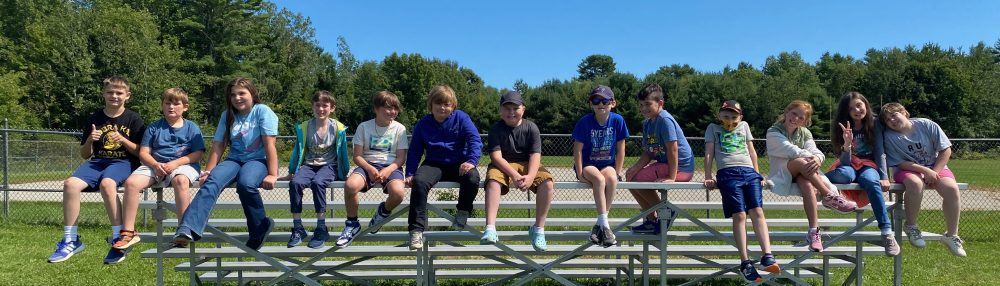


 The Tibbetts Tribe